June 16, 2026
Blp’s First CFO Day: What Fifty Finance Leaders Talked About When Nobody Was Selling Anything
Starting the Day Off
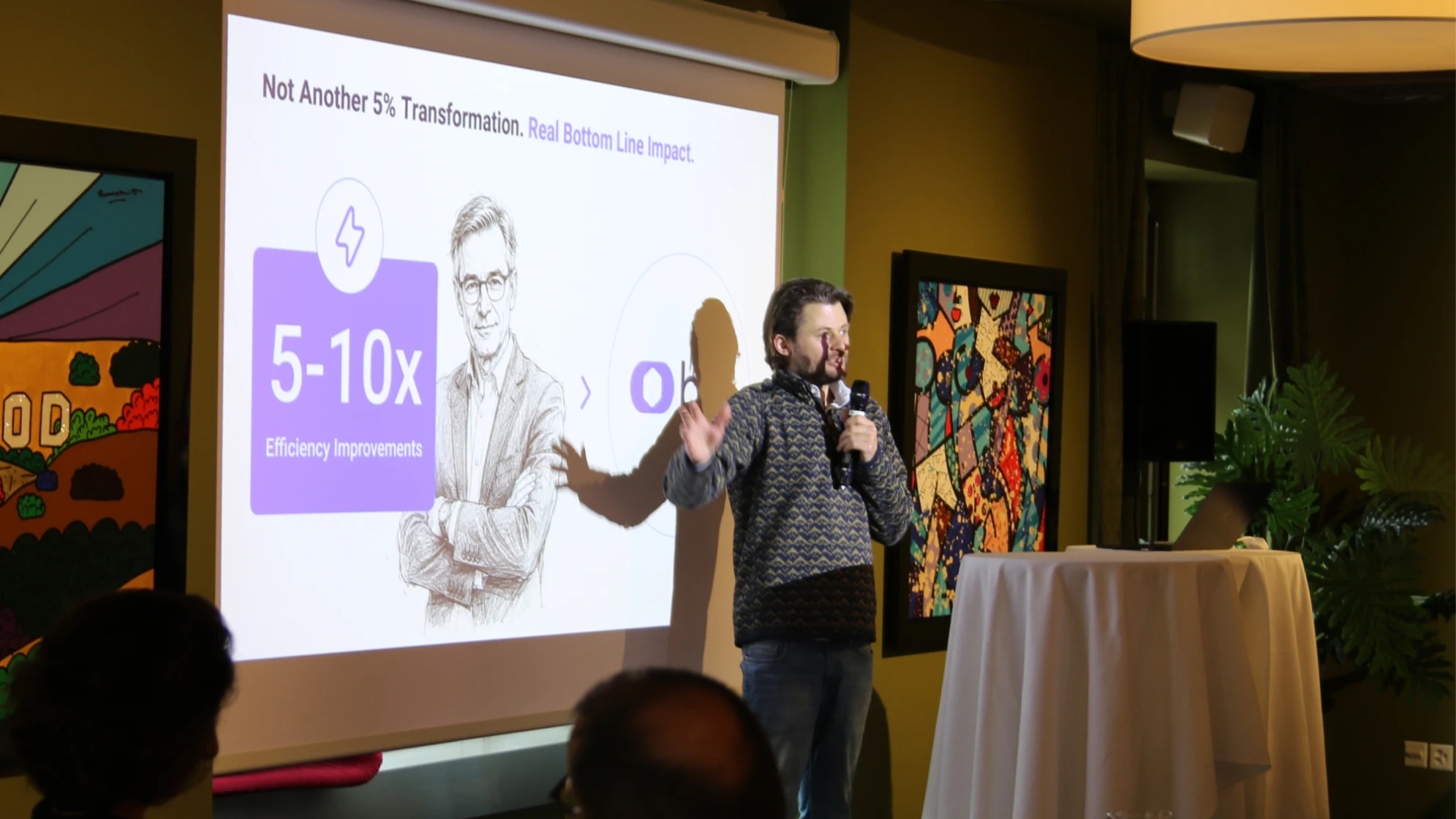
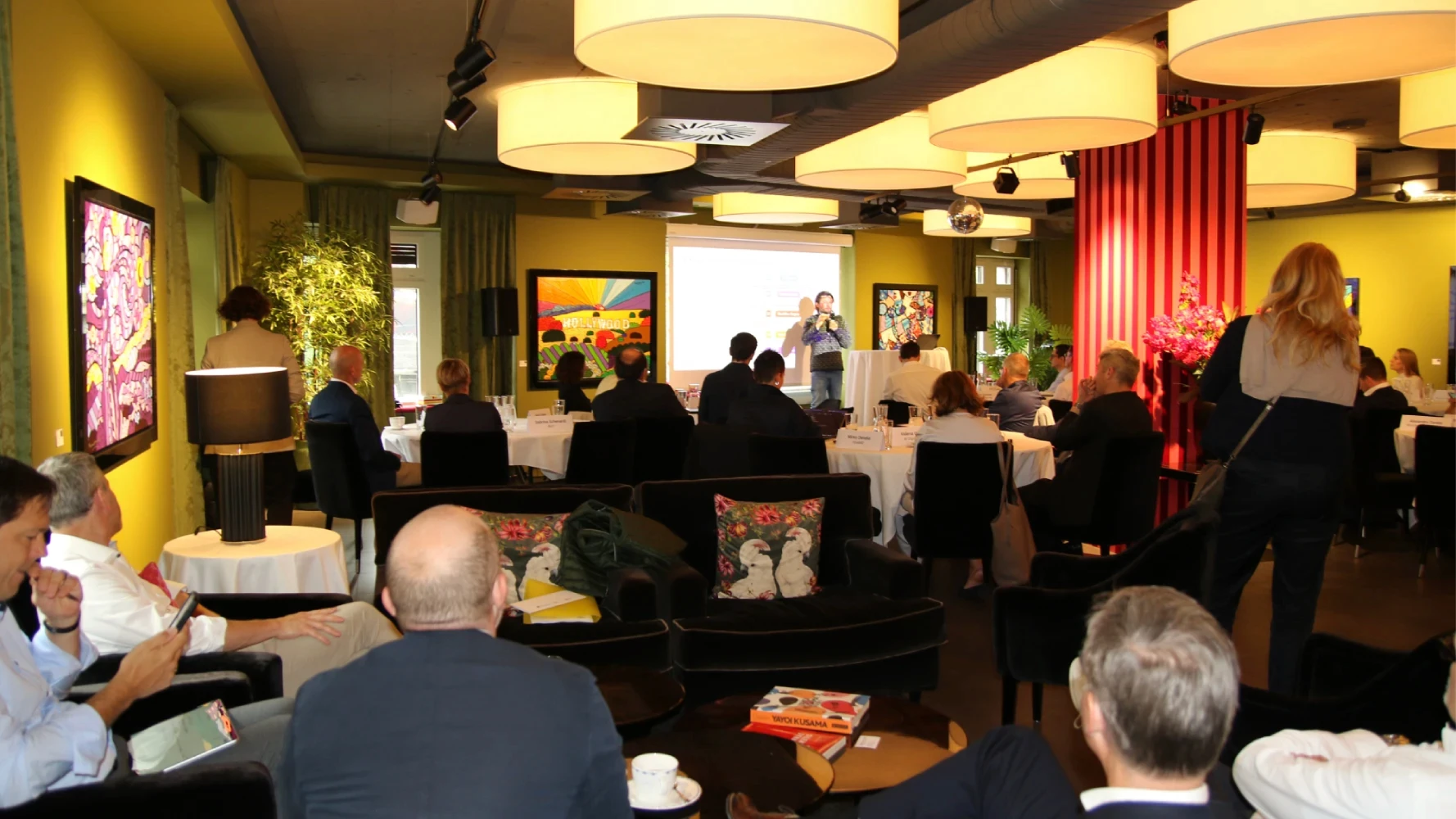
On June 10, 2026, BLP hosted our first CFO Day at the Efficiency Club in Zurich. This venue has been bringing the best minds together since 1936, and that little piece of historical significance made for a great start to a great day. Co-organized with FBXperts, the day brought together 50 CFOs and senior finance leaders, including a number of BLP customers, for an honest peer conversation about AI, automation, and what role the CFO plays now, and how that role will evolve in the near future.
The theme centered around the CFO as technology enabler, not as a theoretical question, but a live one. The event ran under Chatham House Rules, which meant people said things they might not have said otherwise, which is exactly what we were hoping for. Here are some of the topics and key takeaways from the day.
Technology Is Not the Hard Part
Eight years and hundreds of enterprise implementations point to the same conclusion: the technology of AI in finance is largely a solved problem. Decomposing workflows into atomic tasks, orchestrating specialized agents, and delivering real efficiency gains, from 10–20k documents per FTE annually with legacy systems to over 100k with modern AI, is achievable today. The hard part is change management. Across every implementation, the human adoption curve is the decisive factor, and it cannot be navigated without genuine top-down commitment. A consistent theme across the day was that the domain knowledge shaping AI agents needs to come from within the business itself, not solely from IT.
The Pace of Change Is Not Slowing Down
One of the most striking observations of the day was deceptively simple: today is the slowest day of the rest of our lives. Foundation model capability has roughly doubled every year while costs have collapsed, and there is no sign of that changing. For CFOs, this creates a choice that can be framed as three doors: wait, watch, or lead. The case for leading was made clearly: waiting risks falling behind and losing top talent to more innovative organisations, while watching produces long, inconclusive pilots that satisfy nobody. The practical advice was straightforward: pick one process, define a clear ROI thesis, assign a single owner, run a time-capped proof of value with live data, then decide. The worst outcome is not a failed project. It is continuing down the path of failure.
Making Planning Intelligent in a Constrained Industry
Not every business has the luxury of flexibility. In industries where fixed costs dominate, production runs continuously, and just-in-time is simply not an option, the question is how to bring genuine financial intelligence into a rigid operational reality. The answer discussed was integrated planning: consolidating production capacity, sales demand, and financial data into a single platform to enable rolling forecasts and holistic decision-making. The efficiency gains from doing this well are meaningful, with finance teams saving significant time on manual forecasting. The lesson on adoption was practical: aligning incentives, in this case tying a meaningful portion of bonuses to forecast accuracy, changed internal behavior faster than any communication programme.
Transformation Advice From the Trenches
Some of the most useful insights of the day came from hard-won experience of finance transformation in practice. The advice was consistent: start by designing the ideal process without current constraints, then manage scope ruthlessly. This is because every programme carries the accumulated weight of everything an organisation wanted to fix, but never had the chance to address. Incremental rollouts are almost always preferable to big bang: failures are smaller and learnings are faster. Change management is not a workstream alongside the programme: it is the programme. And the longer-term destination for finance teams that automate well is continuous accounting: daily P&L visibility that removes the batch-driven stress of month-end entirely.
The Case Against the Single ERP
The most contrarian view of the day, and the one that generated the liveliest debate, was the argument against consolidating acquired companies onto a single ERP. The case made was that for a decentralised manufacturing model, the cost and disruption of ERP migration simply doesn't justify the return. The alternative is a best-of-breed layer of business applications with robust APIs, creating a unified data layer for what actually drives value: customer data, financial controlling, contract management, and supply chain compliance. Several attendees disagreed strongly, and the debate ended without a clear winner.
Start With Revenue, Not Cost
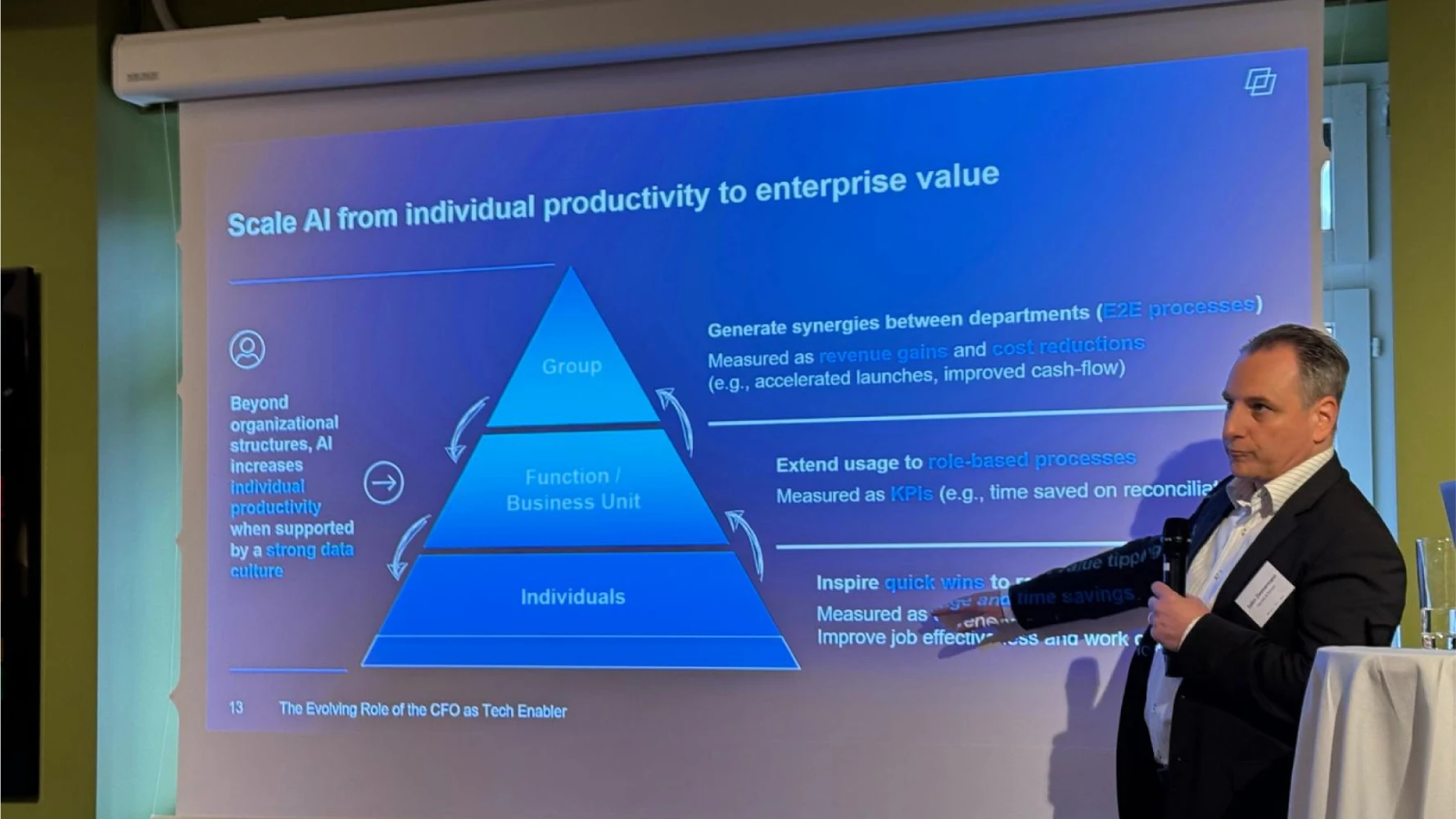
One of the most resonant reframes of the day was the argument that the first AI use cases a finance leader should pursue are on the top line, not the cost side. Revenue-generating applications, such as market selection, missed billing capture, and product bundling generate internal buy-in in a way that headcount reduction never does. The broader point was about foundations: companies that skip years of data platform work and jump straight to AI will struggle. The CFO's role is to hold EBIT accountability for AI investment while business units own the applications that deliver it.
Closing Panel
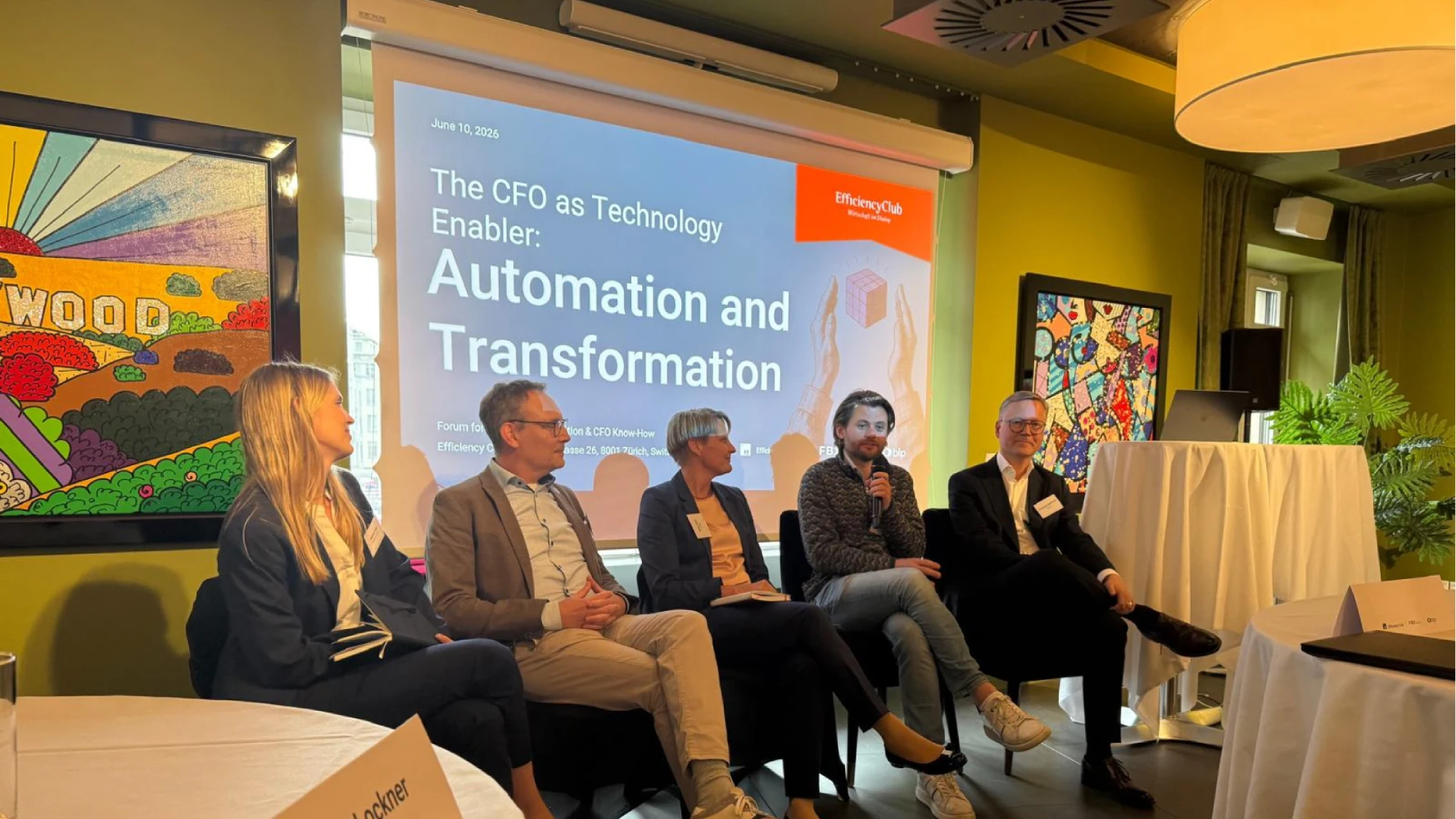
The day ended with an open panel that produced some of the most candid exchanges of the event. The consensus was striking: AI is now widespread in finance, but tangible productivity gains are not yet clearly visible in headcount or P&L statements. Boards are done with vanity metrics: pilot counts and hours saved no longer satisfy. What they want is governance clarity, provable impact, and evidence of genuine operating model change. The panel closed on a note about leadership mindset: the courage to end failing pilots, scale what works, and shift from knowing it all to learning it all.
It was a strong first edition, and a pleasure to meet everyone who was involved. We're looking forward to hosting more events like this, where industry leaders can share knowledge and insights with us and the wider community. Keep an eye out for our next event. We'll be back.
See You Next Time
Keep an eye out for our next event, and get in touch if you're interested in being part of it.
We'll be back.