Remove Manual Execution Stress from Order Processes
We help sales teams automate customer order entry and related sales workflows end-to-end, with more speed, control, and visibility, even when incoming orders are incomplete, inconsistent, or customer-specific.
Think of our solution as an AI teammate for your inside sales team: it handles repetitive order execution work reliably and fast, and brings in people only when judgment, clarification, or approval is truly needed.

Sales Order Automation Works, Until Reality Gets in The Way
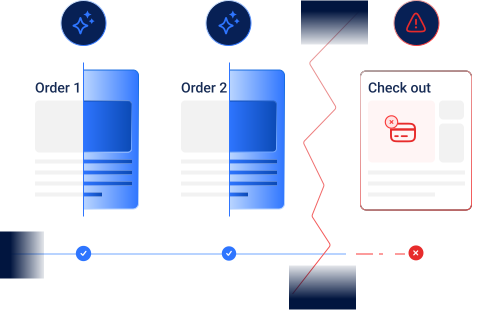
Most sales teams get slowed down by manual work that standard automation does not remove. Customer orders arrive in different formats, with customer-specific item codes, delivery instructions, missing context, or order details embedded in the email body. When that happens, the process slows down and inside sales teams have to step in to interpret the order, create the ERP entry, and keep execution moving.
The Perfect Sales Order Process
Clean, structured incoming orders
Clear item and pricing references
Smooth ERP order creation and confirmation
What Actually Happens
Orders arrive in different formats and channels
Customer-specific data needs interpretation or mapping
Manual follow-up is needed to create accurate ERP orders
Why Traditional Automation Still Leaves Work for Inside Sales
Most sales teams have already tried to improve order entry with ERP workflows, OCR, EDI, or workflow tools. These can help with standard cases, but they struggle when customer orders contain customer-specific item codes, unstructured order details, packaging or quantity variants, delivery-address changes, or other conditions that need to be interpreted and applied correctly.
That is why inside sales teams still spend too much time checking incoming orders, clarifying details, creating ERP entries manually, and following up to keep the process moving.

Typical Sales Workflow


Built to Keep Sales Order Work Moving
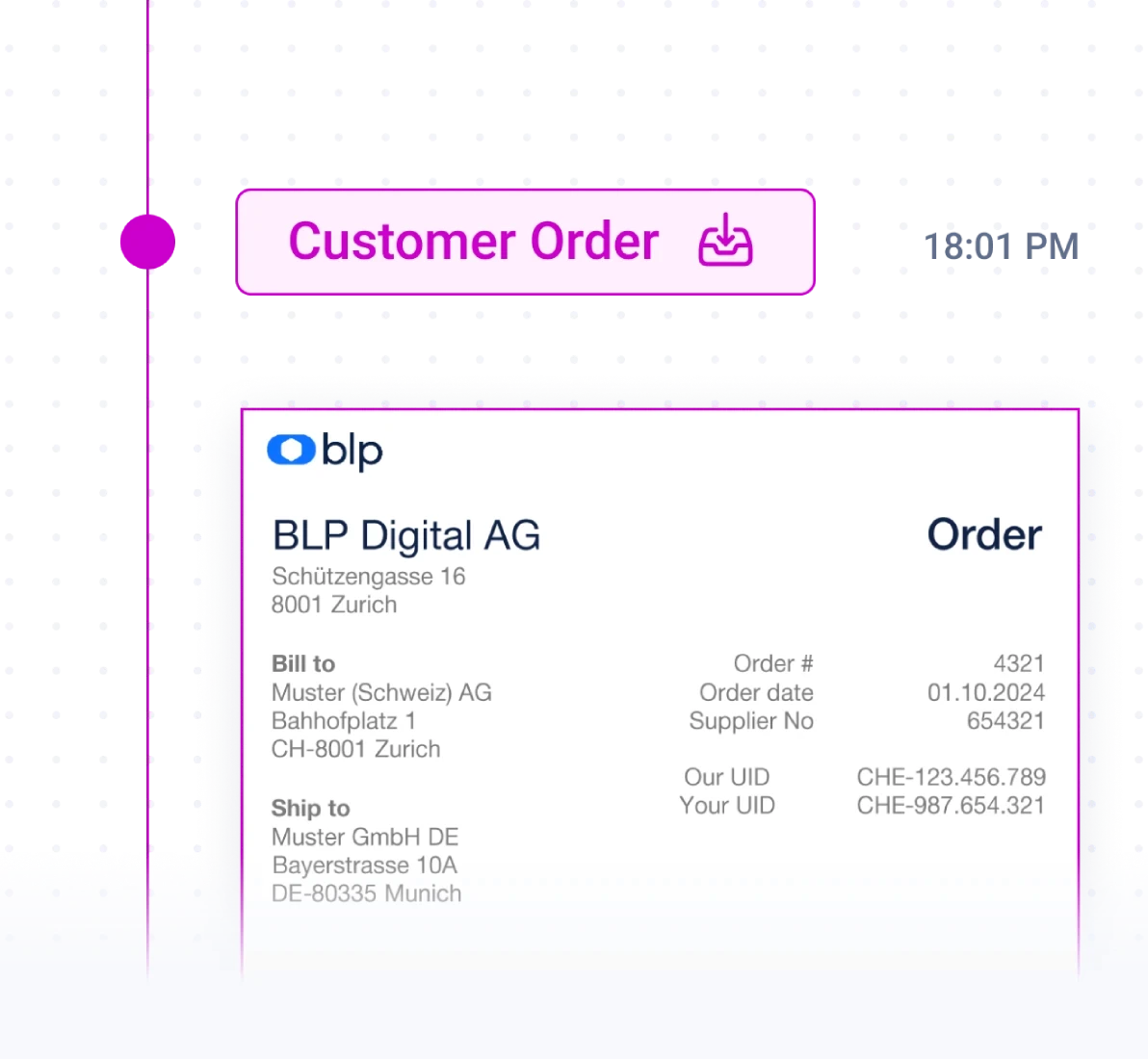
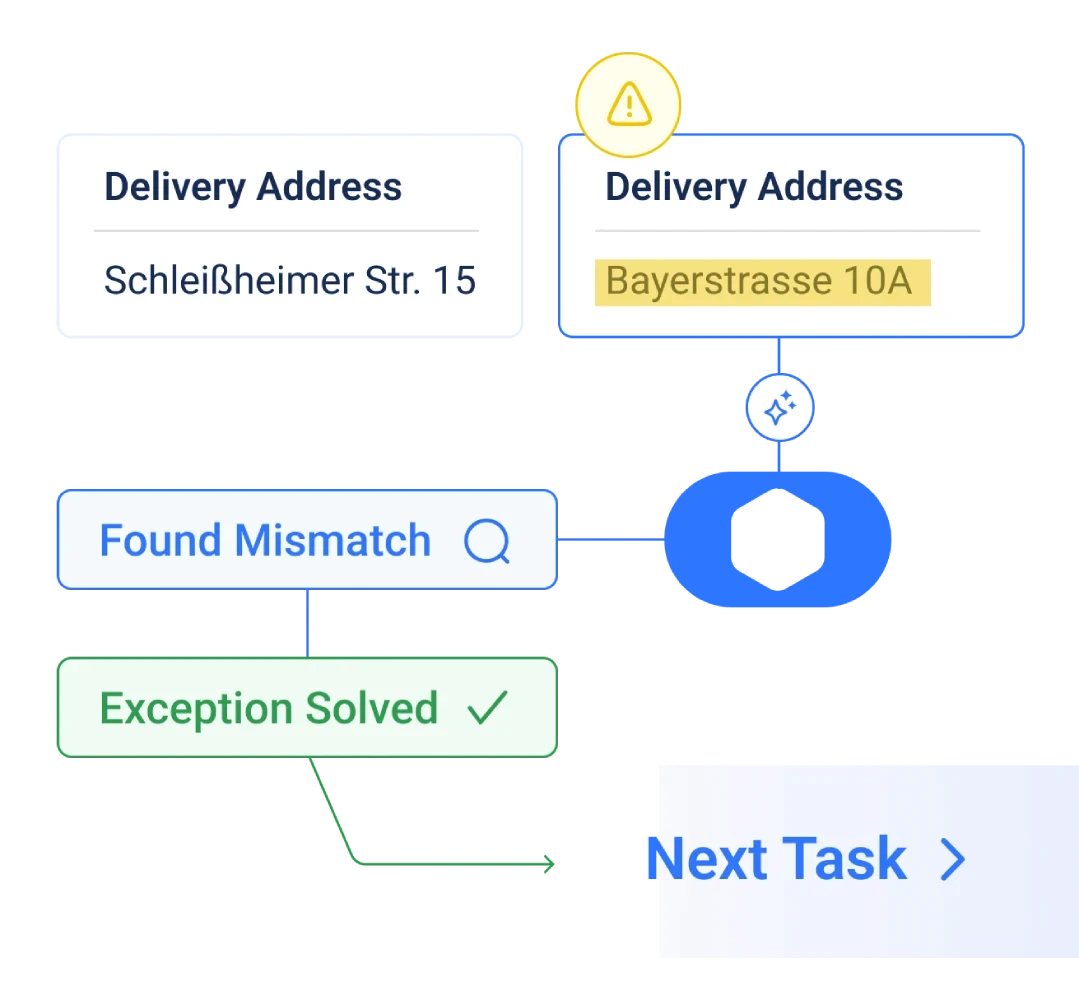
BLP removes the manual execution layer from order entry-heavy sales workflows. Specialized agents handle individual tasks, orchestration keeps the process moving across systems, approvals, and exceptions, and the Digital Twin provides the context, logic, and controls needed for reliable, traceable execution.
That means sales teams step in only when clarification, judgment, or approval is truly required. Everything else moves forward with greater consistency and less effort.
Full Control and Traceability
Every step is visible, auditable, and governed.
Improve data accuracy
Support compliance across processes
Complete governance of information
Execution That Doesn’t Stop
When something falls outside the standard path, BLP helps keep the workflow moving.
Reduce manual workload
Avoid operational bottlenecks
Built to work with exceptions
Consistency Across Sales Workflows
The same logic, controls, and execution model apply across order intake, validation, and exceptions.
Reduce fragmentation
Improve process efficiency
Works with your existing system
Built for The Cases Traditional Tools Can’t Solve
Finance processes do not break on standard invoices.
They break on everything around them.
Matching customer-specific to own item codes
Matching customer-specific to own item descriptions
Processing orders in the email body
Converting unit-of-measure differences
Handling incoming order price discrepancies vs. list price
Applying customer-specific discount codes
Validating requested delivery dates vs. availability
Checking stock against ERP inventory
Detecting duplicate orders
Handling one-time delivery address changes
Splitting orders by delivery address or date
Managing product size and packaging variants
Managing orders to originating quotes
Managing orders to blanket orders
What This Changes for Inside Sales

For Inside Sales
Less manual ERP order entry
Less time spent checking customer-specific order details
Faster handling of order exceptions and ambiguities
Better focus on the issues that actually need attention
For Sales Operations
More consistent order capture across channels and customers
Fewer delays caused by manual clarification and rework
Better transparency across incoming order workflows
Less reliance on overloaded IT for process changes
For Business
Faster, more reliable order processing
Better scalability as order volume grows
Improved customer responsiveness
Better use of existing sales support resources